
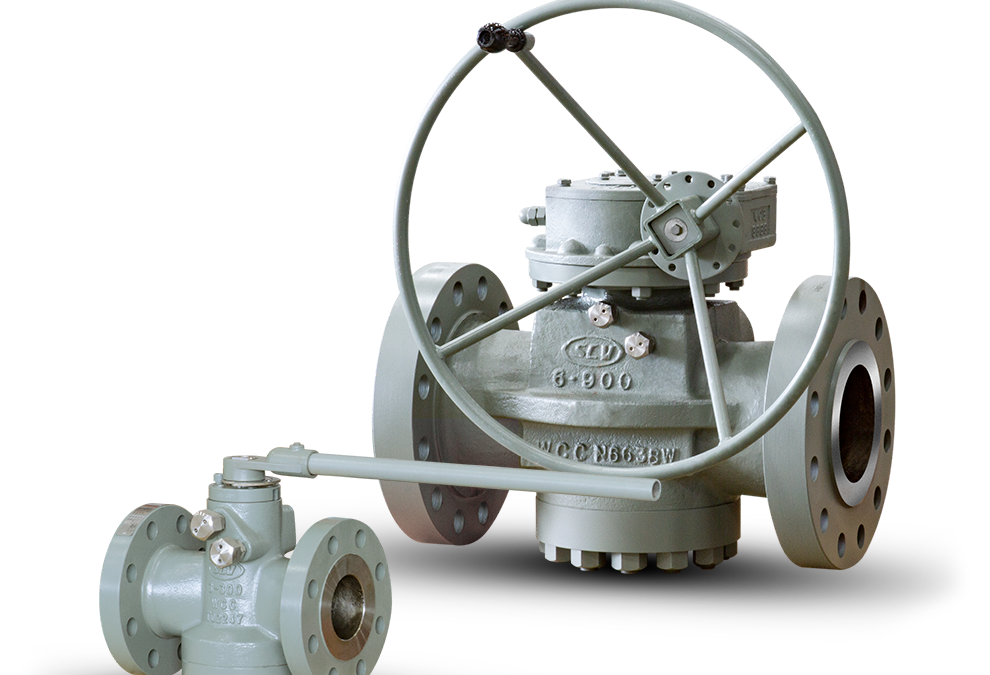
Pressure balanced plug valves are quarter-turn valves engineered to equalize lubricant pressure across the plug, eliminating the seizing and high-torque problems that plague conventional lubricated plug valves in high-pressure service. In gas transmission, refining, and pipeline applications, they deliver reliable bubble-tight shutoff at pressures up to ANSI Class 600 and beyond, with operating torque reduced by 30–50% compared to standard lubricated designs. This guide explains how they work, what they cost, how to size them, and how to select the right supplier.
What are pressure balanced plug valves?
Pressure balanced plug valves are a specialized class of lubricated plug valve where sealant injection channels connect both ends of the tapered plug, so lubricant pressure acts equally on the top and bottom faces. This eliminates the pressure differential that forces the plug into its seat and causes seizing. The result is consistent, low operating torque even after long periods in one position — a critical advantage in isolation and emergency shutdown service.
The design combines the tight sealing of a lubricated plug valve with dramatically improved operability. A sealant film separates plug and body, providing a secondary seal that can be renewed in-line without removing the valve from the pipe. Because the plug is hydraulically balanced, torque stays predictable across the valve’s service life. These characteristics make pressure balanced plug valves well suited to natural gas pipelines, gathering systems, and refinery process lines where dependable isolation matters more than throttling capability.
How do pressure balanced plug valves work?
Pressure balanced plug valves work by routing injected sealant through internal channels to both the top and bottom of the tapered plug, neutralizing the axial force that line pressure would otherwise exert. In a conventional lubricated plug valve, upstream pressure pushes the plug harder into the smaller end of the taper, steadily increasing the torque needed to turn it. The balanced design cancels this force.
Sealant is injected through a fitting at the top of the valve. It flows into grooves machined into the plug, forming a continuous film between the plug and the body seat. This film does three jobs at once: it lubricates the turning surfaces, provides an emergency secondary seal, and lifts the plug slightly to reduce metal-to-metal contact. The American Petroleum Institute publishes specifications such as API 6D that govern pipeline valve performance and testing. Operators recharge sealant on a maintenance schedule, and because it can be done under pressure, the valve stays in service throughout.
What applications use pressure balanced plug valves?
Pressure balanced plug valves are used primarily in natural gas transmission, gathering, and distribution systems, as well as in refining, petrochemical, and chemical process isolation. Their strength is dependable on/off isolation, so they appear wherever a line must be shut tight and reopened reliably years later.
Common service environments
- Gas pipelines and gathering lines — block valves, mainline isolation, and station piping
- Refinery and petrochemical units — process isolation on hydrocarbon and utility service
- Compressor and pump stations — suction and discharge isolation
- Storage and terminal facilities — tank isolation and manifold blocks
The U.S. Energy Information Administration reports that the United States operates more than three million miles of natural gas pipeline, and each isolation point on that network depends on reliable quarter-turn valves. Pressure balanced plug valves are frequently specified in these systems because they offer positive shutoff and predictable torque even after sitting idle for extended intervals — a scenario that defeats many other valve types.
How much do pressure balanced plug valves cost?
Pressure balanced plug valves typically range from a few hundred dollars for small 2-inch Class 150 units to several thousand dollars for large-diameter Class 600 valves with gear operators. Price depends primarily on size, pressure class, body material, and end connections. A 4-inch Class 300 carbon steel valve commonly falls in the low-to-mid four figures.
Cost drivers
- Size — cost rises sharply with bore diameter; a 12-inch valve costs many times a 2-inch
- Pressure class — Class 600 requires heavier bodies and thicker walls than Class 150
- Material — carbon steel is baseline; stainless and alloy trims add significant cost
- Operator — a gear operator or actuator adds to the base valve price
- End connections — flanged, threaded, or weld-end options affect machining cost
Because these are engineered products, list pricing is uncommon; suppliers quote against specific line specifications. Total cost of ownership favors these valves over cheaper alternatives, because in-line sealant renewal and low torque reduce maintenance labor and avoid the downtime of removing a seized valve for rebuild.
How do you size and select the right valve?
Size a pressure balanced plug valve by matching the valve bore to the pipe, then confirming the pressure class, temperature rating, body material, and end connection against your line specification. Start with full-bore versus reduced-bore: full-bore valves match pipe ID and allow pigging, while reduced-bore valves cost less and suit non-pigged lines.
Selection checklist
1. Pressure class — Class 150, 300, or 600 per the piping specification
2. Bore type — full or regular bore based on flow and pigging needs
3. Body material — carbon steel for most hydrocarbon service; alloys for corrosive media
4. End connection — raised-face flange, butt-weld, or threaded
5. Operator — lever for small valves, gear operator for larger sizes or higher torque
6. Sealant compatibility — confirm the sealant suits the process fluid and temperature
The ASME B16.34 standard governs pressure-temperature ratings for valves and is the reference most engineers cite when confirming a valve rating. When a gear operator is required, matching operator torque output to valve break torque is essential; undersized operators lead to hard operation and premature wear.
Why do competitors rank for these valves, and what should buyers look for?
Several established suppliers — including large energy systems distributors like R&M Energy Systems — rank well online because they carry broad catalogs and have long histories in oilfield and pipeline supply. What matters to a buyer, however, is not catalog breadth alone but access to the specific brands, sizes, and specifications a project demands, backed by technical support that understands the application.
What separates a strong valve supplier
- Brand access — carrying proven plug valve lines such as KF, Galli & Cassina, and WKM rather than a single house brand
- Application knowledge — engineers who can confirm sizing, torque, and material selection against your line spec
- Inventory and lead time — stock on common configurations to avoid long fabrication delays
- Aftermarket support — sealant, repair kits, and gear operators for the valves supplied
A distributor that combines multiple respected manufacturers with hands-on technical guidance often serves a project better than a single-brand catalog, because it can match the exact valve to the service instead of forcing the closest in-stock substitute. Buyers evaluating suppliers should weigh brand range and engineering support as heavily as price.
What maintenance do pressure balanced plug valves require?
Pressure balanced plug valves require periodic sealant injection to maintain the lubricant film, and this is their primary routine maintenance task. Injection frequency depends on service severity, cycling frequency, and temperature, ranging from every few months in demanding applications to annually in mild service.
Routine maintenance steps
- Sealant injection — recharge through the top fitting on schedule; can be done under line pressure
- Operation — cycle the valve periodically to keep the plug free and confirm operability
- Inspection — check the sealant fitting, check valve, and stem seals for leaks
- Torque monitoring — a rise in operating torque signals sealant depletion or contamination
The great advantage of the balanced design is that the emergency sealant system can re-seal a worn valve in place, buying time before a full overhaul. When rebuild is needed, the plug and seats can often be refurbished rather than replaced. Keeping the correct sealant grade on hand — matched to the process fluid and temperature — is the single most important practice for long service life. Neglected sealant is the most common cause of hard operation.
Where can you buy pressure balanced plug valves?
Pressure balanced plug valves are available through valve manufacturers and specialized energy sector distributors that carry engineered plug valve lines and support them with sizing, sealant, and gear operators. Energy Valves distributes pressure balanced lubricated plug valves and related equipment, representing brands including KF, Galli & Cassina, and WKM, and also supplies gear operators for larger valve configurations.
What to confirm before ordering
- Full line specification: size, class, material, ends, and operator
- Sealant type and compatibility with the process fluid
- Lead time and available stock for your configuration
- Aftermarket parts and technical support availability
You can review available product lines and specifications on the pressure balanced lubricated plug valves page and confirm compatibility with your application. When requesting a quote, provide the complete line specification so the supplier can match the exact valve rather than the nearest substitute. For energy sector isolation service where reliability and predictable torque matter, a properly specified pressure balanced plug valve delivers years of dependable shutoff with minimal routine maintenance.