
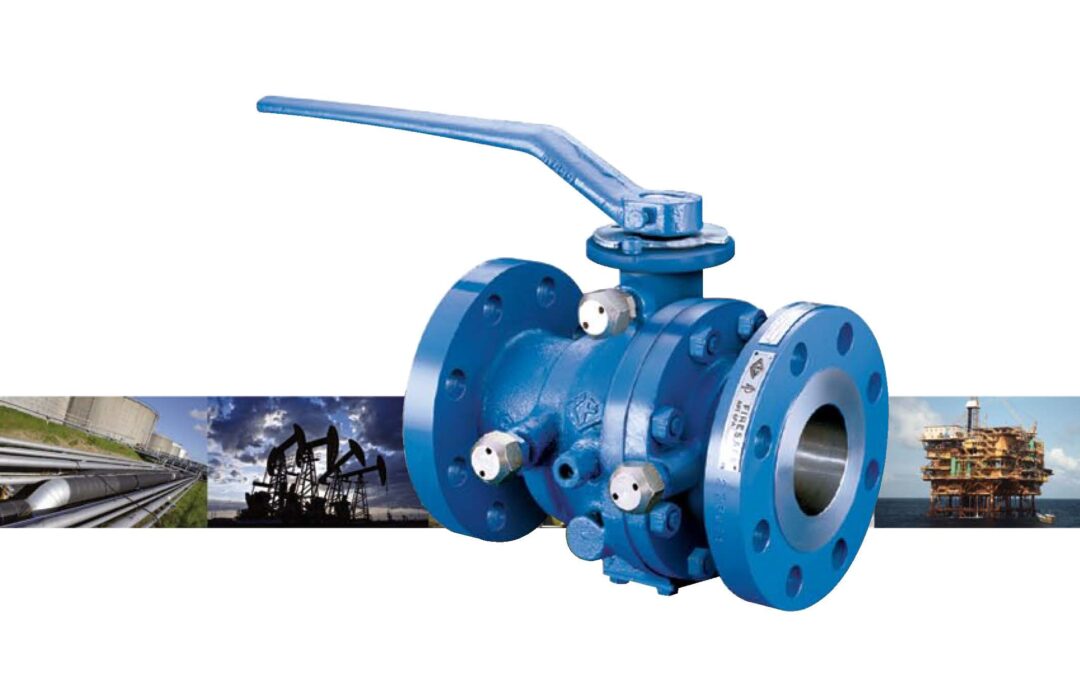
KF valves are a line of industrial plug valves engineered for severe-service energy applications, with pressure-balanced lubricated plug designs available in ANSI Class 150 through 2500 and sizes typically ranging from 1/2″ to 36″. If you are sourcing KF valves for pipeline, refining, or gas-processing service, this guide explains the valve types, pressure ratings, materials, sealing systems, and selection criteria you need to specify the correct unit the first time.
KF valves are best known for their sleeved and lubricated plug valve designs, which deliver tight shutoff and low-torque operation in high-cycle isolation and diverter service. Below we break down how they work, what they cost to specify correctly, and how to choose between competing plug valve options.
What are KF valves and where are they used?
KF valves are quarter-turn plug valves designed for isolation and diverter service in the energy sector. A plug valve uses a tapered or cylindrical plug that rotates 90 degrees to open or close the flow path, providing fast, positive shutoff. KF’s line emphasizes pressure-balanced lubricated plug valves, in which injected sealant lubricates the plug-to-body seat and balances line pressure across the plug to keep operating torque low even at high pressures.
Typical applications include:
- Crude oil and refined product pipelines
- Natural gas gathering, transmission, and processing
- Refinery and petrochemical process isolation
- Manifold, header, and diverter systems requiring frequent cycling
Because plug valves offer a straight-through flow path and minimal turbulence, they are favored where pressure drop and reliable bubble-tight shutoff both matter. The American Petroleum Institute publishes the governing standards for these products; see API Spec 6D for pipeline valve requirements. KF valves are commonly specified where lubricated plug performance and long service intervals are priorities over the lower initial cost of a soft-seated ball valve.
How do pressure-balanced lubricated plug valves work?
A pressure-balanced lubricated plug valve works by injecting a sealant compound through a fitting at the top of the valve, which flows down machined grooves in the plug and body to form a continuous hydraulic film. This film seats the plug, lubricates the metal surfaces, and equalizes pressure above and below the plug so the operator faces far less torque than an unbalanced design.
The key mechanical elements are:
The plug and body seating surfaces
Precision-machined tapered surfaces provide metal-to-metal contact backed by the sealant film. When sealant pressure exceeds line pressure, the plug lifts fractionally, breaking friction before rotation.
The sealant injection system
A check valve and injection fitting let operators re-lubricate the valve in-line without removing it from service, restoring the seal if it degrades over years of cycling.
The pressure-balance channels
Internal passages route line pressure to both ends of the plug, canceling the axial thrust that would otherwise jam the plug against the body.
This architecture is why lubricated plug valves like KF valves remain serviceable for decades. The U.S. Department of Energy documents valve reliability as a major factor in pipeline uptime, and re-lubrication maintainability directly supports that goal.
What sizes, pressure classes, and materials are available?
KF valves and comparable energy-service plug valves are typically offered across a broad envelope so a single product family can cover most pipeline and process needs. Standard configurations include:
Sizes
Common ranges run from 1/2″ through 36″, with the most frequently specified sizes falling between 2″ and 16″ for gathering and process lines.
Pressure classes
ANSI/ASME Class 150, 300, 600, 900, 1500, and 2500 are typical, covering low-pressure product lines up to high-pressure gas and injection service.
Body and trim materials
- Carbon steel (ASTM A216 WCB / A105) for general hydrocarbon service
- Low-temperature carbon steel (LCC / LF2) for cold-weather installations
- Stainless steel (CF8M / 316) for corrosive or sour service
- Overlay and hard-facing on seating surfaces for erosive media
End connections include raised-face flanged, ring-type-joint (RTJ), butt-weld, and threaded ends. Matching the material and end connection to your line specification prevents costly field rework. When in doubt, confirm the wetted materials against your fluid’s NACE MR0175 sour-service requirements before ordering.
Why do competitors rank for KF valves, and what does a specialist supplier do better?
Competitors often rank for KF valves simply because they publish thin catalog pages that list a model number without the engineering context a buyer actually needs. Ranking on a keyword is not the same as solving a specification problem. A dedicated valve specialist earns the specifier’s trust by pairing the KF product line with application knowledge across multiple complementary brands.
The practical difference shows up in three ways:
Brand breadth
A specialist that carries KF alongside Galli & Cassina and WKM plug and gate valves can recommend the correct valve for the pressure class and media rather than forcing every job onto a single line.
Actuation and gear operators
Large plug valves need correctly sized manual gear operators or actuators. A supplier that also stocks gear operators such as DYNATORQUE 90 units can deliver a matched, ready-to-install package.
Documentation and lead time
Material test reports, NACE compliance, and accurate delivery commitments matter more to a plant than a low headline price. Energy Valves supplies KF valves alongside these complementary product lines and supporting documentation; see their plug valves catalog for current offerings.
How do you select the right KF valve for your application?
Select the right KF valve by matching five parameters in order: media, pressure, temperature, size/flow, and end connection. Skipping any one of these is the most common cause of a mis-specified valve.
Step 1: Define the media
Is the fluid clean hydrocarbon, sour gas, or an erosive slurry? Sour service pushes you toward stainless trim and NACE-compliant materials.
Step 2: Set the pressure class
Use your maximum allowable operating pressure and temperature together to pick the ANSI class from the ASME B16.34 pressure-temperature ratings.
Step 3: Size for flow
Oversizing wastes money and can cause throttling problems; size to the line, not to the flange.
Step 4: Choose the operation
Manual lever below roughly 6″, geared operator or actuator above it.
Step 5: Confirm the end connection
Match flange rating, facing, and bolt pattern to the mating equipment. Getting these five right the first time avoids the weeks-long delays that come with returning a wrong valve.
What does a KF valve cost and what drives the price?
KF valve pricing depends far more on size, pressure class, and material than on the brand label, so a meaningful budget number requires the full specification. As a general guide, a small carbon-steel Class 150 plug valve may run a few hundred dollars, while a large stainless Class 900 or 1500 unit with special trim can reach five figures.
The main cost drivers are:
- Size — cost scales sharply with bore diameter
- Pressure class — Class 900+ requires heavier bodies and more machining
- Material — stainless and exotic alloys cost multiples of carbon steel
- End connections — RTJ and butt-weld ends add machining cost over standard flanges
- Actuation — gear operators and actuators are priced separately
You may not need the highest-rated valve on your manifold; over-specifying pressure class or alloy is a frequent source of wasted budget. The best way to control cost is to send a precise data sheet and let the supplier quote the exact configuration rather than a padded catalog list price.
How do KF valves compare to ball and gate valves?
KF plug valves compete most directly with ball valves for quarter-turn isolation and with gate valves for full-bore on/off service, and the right choice depends on service life and maintainability. Plug valves win where in-line serviceability and long-term tight shutoff matter; ball valves win on lower initial cost and lighter weight.
Plug valves vs. ball valves
Lubricated plug valves can be re-sealed in service by injecting sealant, extending life without shutdown. Soft-seated ball valves are cheaper up front but the seats eventually require removal and replacement.
Plug valves vs. gate valves
Gate valves offer minimal pressure drop when fully open but are slow to operate and prone to seat erosion in throttling or high-cycle service. Plug valves cycle faster and tolerate frequent operation better.
For high-cycle diverter and manifold duty in the energy sector, the plug valve’s fast quarter-turn action and field-serviceable sealant system usually justify its higher initial cost. For infrequently operated block valves, a gate or ball valve may be the more economical choice.
How do you maintain and re-lubricate KF valves?
Maintain KF lubricated plug valves by re-injecting the correct sealant on a schedule tied to cycle count and media, typically every few months to a few years depending on service. Proper lubrication is what keeps operating torque low and shutoff tight over decades.
A practical maintenance routine includes:
Regular sealant injection
Use the manufacturer-specified sealant grade for the temperature and media; the wrong compound can harden or wash out.
Torque monitoring
A rising operating torque signals sealant depletion or debris — inject before it becomes hard to turn.
Periodic full lubrication cycles
Stroke the valve during injection so sealant coats the entire plug surface, not just the seated position.
Documentation
Log each injection so you can predict service intervals across a facility. Following the valve manufacturer’s published maintenance procedure preserves the warranty and the multi-decade service life these valves are designed to deliver.
Where can you source KF valves and matched components?
You can source KF valves through valve distributors and specialists that carry the line alongside complementary plug and gate valve brands and the gear operators needed to actuate larger sizes. The advantage of a single specialist source is a matched, documented package rather than parts assembled from several vendors.
When evaluating a supplier, confirm they can provide:
- Full material test reports and NACE compliance documentation
- Correctly sized gear operators or actuators for your valve sizes
- Alternative brands so the recommendation fits the application, not the inventory
- Clear, committed lead times
Energy Valves is one supplier that distributes KF valves along with Galli & Cassina and WKM product lines and DYNATORQUE gear operators for energy-sector applications. Requesting a quote with a complete data sheet — media, pressure, temperature, size, and end connection — is the fastest way to get an accurate price and delivery commitment on the exact KF valve configuration your line requires.