
Build a More Profitable Valve Inventory
Stocking ball valves is a balancing act. You need the common configurations customers expect right away, but you also do not want capital sitting on specialty products that move slowly. We help resellers make smarter choices by separating everyday replacement needs from applications that call for more specialized valve designs.
Floating and trunnion-mounted ball valves are built for different operating conditions. Knowing how each design handles pressure, load, size, and actuation helps you recommend the right valve based on service requirements, not just the part number a customer hands you. That kind of guidance can build stronger customer trust and help prevent a poor replacement choice.
How Floating and Trunnion Designs Carry Loads
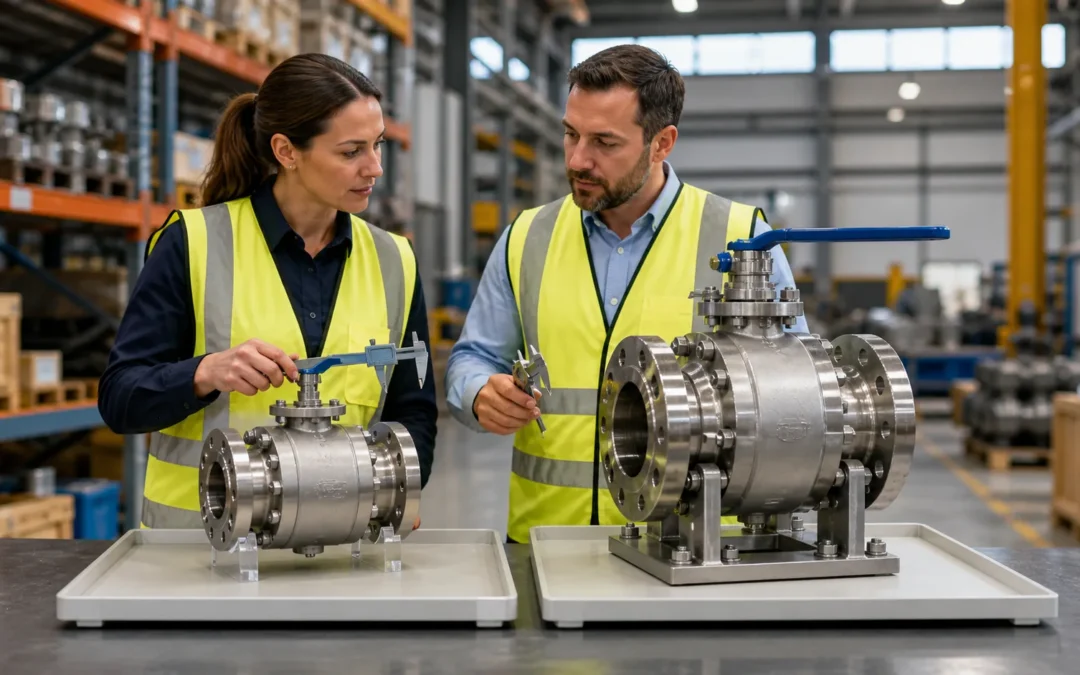
The biggest difference is how the ball is supported inside the valve. In a floating ball valve, the seats support the ball. When pressure enters the valve, the ball shifts slightly downstream and presses against the downstream seat to create the seal.
A trunnion-mounted ball valve works differently. Upper and lower trunnion supports anchor the ball in place. Instead of the ball moving toward the seat, the seats move toward the supported ball to establish sealing contact.
That change in support affects operating torque. As bore size, pressure, and pressure differential rise, a floating ball can place more load on the seats. This may increase the force needed to turn the ball. Trunnion designs generally provide lower, more predictable torque in larger or higher-pressure services because the trunnions carry much of the ball load.
For your customers, the practical distinction often looks like this:
- Floating valves can be a practical fit for smaller sizes and moderate service conditions.
- Trunnion-mounted ball valves are commonly a better match for larger sizes and demanding pressure loads.
- Trunnion designs may be easier to pair with automation where consistent operating torque matters.
- Each valve still needs to match the service media, temperature range, pressure class, and shutoff needs.
We recommend treating these designs as separate inventory categories, not as interchangeable versions of the same valve.
Match Valve Designs to Energy Service Demands
Floating ball valves often serve well in smaller pipeline connections, utility services, general isolation duties, and moderate-pressure applications. Their compact design makes them familiar choices for many replacement orders. Before we suggest a model, though, we look beyond size and end connection. The media, operating temperature, material compatibility, pressure rating, and required shutoff performance all matter.
Trunnion-mounted ball valves tend to add value when customers face heavier service demands. Larger line sizes, high-pressure transmission systems, upstream production operations, compressor stations, and terminal facilities can all create conditions where supported-ball construction makes sense. In severe or high-cycle work, customers may also need a valve that performs reliably with an actuator and holds up under demanding pressure conditions.
A replacement request is a good starting point, but it should not always end the conversation. Existing valve specifications may reflect older operating conditions, a past repair decision, or a configuration that was simply available at the time. We encourage resellers to ask a few clear questions before quoting an equivalent valve:
- What are the normal line pressure and maximum pressure differential?
- What media moves through the line?
- Is the valve manually operated or connected to an actuator?
- Has the existing valve had sealing, torque, or maintenance concerns?
- Does the customer need specific documentation or end connections?
Those answers can reveal whether a floating valve remains appropriate or whether a trunnion design is the safer fit for the work.
Stock Trunnion-Mounted Ball Valves Where They Win
You do not need to carry every possible trunnion configuration to serve high-value opportunities well. Instead, we suggest building your stocked assortment around the pressure classes, common sizes, end connections, and materials that fit the energy customers you serve most often. This keeps your inventory focused while helping you respond faster when a larger or higher-pressure request arrives.
Floating valves can fill a different role in the warehouse. Common sizes, standard materials, and familiar end connections may support frequent replacement orders and smaller project needs. Keeping those faster-moving products readily available can help you handle urgent requests without filling shelves with every specialty option.
A tiered inventory model gives you room to do both. Keep proven, high-turn valves on hand, set reorder triggers based on buying patterns, and maintain visibility into availability for specialized products. Through our wholesale supply network, we can help you source established brands such as WKM, Wheatley, Nutron, Demco, and other industrial valve manufacturers when project specifications go beyond standard stock.
Set Inventory Levels for Fall Turnarounds
Early September is a smart time to review your ball valve inventory. Fall can bring planned maintenance, turnaround work, facility upgrades, and customer purchasing before year-end budgets close. Winter operating demands may also create more urgent replacement requests, especially when equipment downtime is not an option.
Start with what your customers have already told you. Review prior fall orders, open quotes, maintenance schedules, and known project activity. Then compare that demand with available stock and supplier lead times. Pay special attention to valves used in critical service, where availability, documentation, and application support may matter more to the customer than simply getting the first available option.
A short seasonal outreach plan can uncover needs before a request becomes an emergency. Ask key accounts about upcoming repairs, planned shutdowns, expected replacement work, and capital projects. With more lead time, we can help you confirm whether a standard floating valve fits the job or whether trunnion-mounted ball valves should be considered.
Turn Application Insight Into Stronger Reseller Sales
Floating and trunnion ball valves solve different problems. Floating designs can cover many economical, everyday isolation needs, while trunnion-mounted options are often better suited to larger, higher-pressure, and more demanding energy applications. A well-planned inventory recognizes both roles.
The best assortment is not the one with the most valve variations on the shelf. It is the one that matches your customers’ common needs, identifies gaps before seasonal demand rises, and gives you a clear path to specialized configurations when operating conditions call for them.
Build A More Responsive Valve Inventory
At Energy Valves, we help resellers source trunnion-mounted ball valves for demanding pressure, size, and service requirements. Our team can help you compare options that fit your inventory strategy and customer applications. When you need product guidance or availability details, contact us to discuss your requirements.