
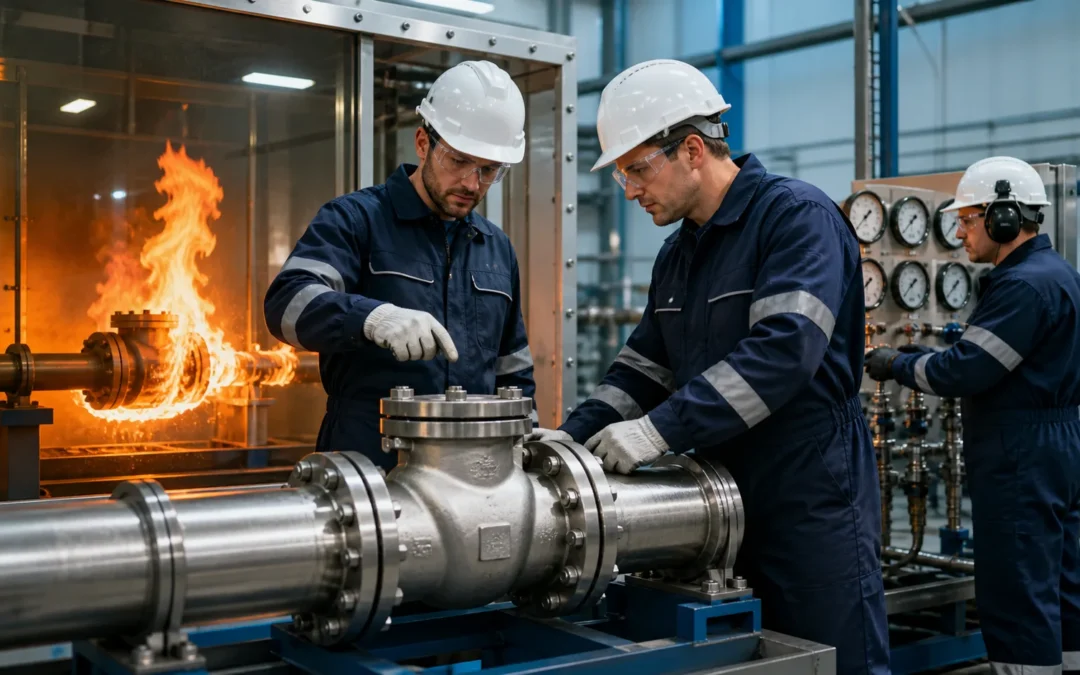
Pipeline Risk Begins Before the Flames Reach the Valve
A failed fire test is more than a product-quality concern. For pipeline operators, EPC firms, and valve sellers, it can point to a loss-of-containment risk during one of the hardest conditions a valve may face. Heat, pressure, and flowing media can expose weaknesses that normal service may never reveal.
Check valves are expected to limit reverse flow and control leakage, even after exposure to high temperatures. When they cannot do that, the issue may affect safety reviews, project approvals, product acceptance, and confidence in the supply chain. We want to help you understand what a failed test can mean, what documentation to ask for, and how to specify fire-tested check valves for pipeline applications before installation becomes a problem.
Fire-Test Failures Reveal Leakage Paths
During a fire test, a check valve may fail because of excessive external leakage. Heat can damage or weaken soft sealing materials, change the fit between metal parts, and place extra stress on pressure-containing connections. The result may be leakage through body joints, cover gaskets, hinge-pin areas, bolting, or other sealing points.
Internal leakage matters just as much. A check valve is installed to stop unwanted reverse flow. If the valve cannot maintain an effective seal after fire exposure, product may travel backward through the line. That can make isolation harder and create added challenges for containment and emergency response.
When we review a valve for a demanding pipeline service, we look beyond a general statement that a product family is “fire safe.” The actual construction matters. Test evidence should match the valve as closely as possible, including its pressure class, materials, size, end connection, and intended service conditions.
Common questions to raise before quoting include:
- Where could external leakage occur if soft materials are damaged?
- Does the valve maintain its intended reverse-flow function after fire exposure?
- Was the tested valve built with the same trim and pressure rating required for the project?
- Does the documentation apply to the specific check valve configuration being supplied?
A report for a different design may not provide enough confidence for the installation in front of you.
Failed Tests Can Affect the Whole Pipeline Project
A fire-test failure can quickly move beyond the valve itself. During qualification or submittal review, a valve may be rejected, removed from an approved package, or sent back for replacement. Contractors and distributors can then face schedule pressure before commissioning, especially when the needed configuration is not readily available.
From a safety and asset-protection standpoint, leakage during a fire can add fuel release concerns. A check valve that does not close as intended may also allow reverse flow into piping or equipment that should remain protected. The valve’s job is simple in concept, but the consequences of poor performance can spread through the system.
For resellers, the commercial impact can be just as serious. Missing documentation or a nonconforming valve configuration may lead to returns, expedited sourcing efforts, warranty discussions, and a strained customer relationship. We often see the best results when fire-test requirements are reviewed early, rather than after a submittal has already been challenged.
Late summer is a smart time to confirm these details. Fall construction windows, turnaround work, winter-weather planning, and year-end capital deadlines can make last-minute changes especially difficult. A clear specification gives everyone more time to verify the correct valve before the project reaches a time-sensitive stage.
Materials and Design Shape Fire Performance
Material selection has a major effect on how a check valve behaves in a fire. Seats, seals, gaskets, and packing systems do not all respond to heat in the same way. Nonmetallic parts can provide strong sealing performance in normal operation, but they may be damaged when temperatures rise sharply.
For that reason, many fire-safe designs depend on secondary metal-to-metal sealing features. These features are intended to help limit leakage after softer materials have been affected by heat. Whether they work as intended depends on the full valve design, not one component alone.
We also consider how the valve body and moving parts fit together under thermal stress. Expansion can affect disc movement, hinge mechanisms, seat retention, cover bolting, and sealing surfaces. A design that performs well in regular service may not behave the same way after fire exposure.
Before you rely on a fire-test claim, confirm details such as:
- Body and cover construction
- Seat, seal, gasket, and trim materials
- Pressure rating and size range
- End connection type
- Any application-specific changes to the standard valve design
A brand name or a broad product-family label is not enough by itself. The tested construction should line up with the actual valve being specified.
Specify Tested Designs Before the Purchase Order
Fire-test performance should be a specification decision, not a last-minute paperwork request. Once a purchase order is placed, changing a check valve because of missing test evidence can put pressure on everyone involved. We recommend confirming the required standard and supporting documents while the valve is still being selected.
When a customer specification calls for it, request relevant fire-test reports and certification documentation for the applicable standard, such as API 6FD for pipeline check valve service. The project requirements should always determine which standard applies. It is also wise to compare the test documentation with the exact configuration proposed for the job.
A sound review includes the pipeline media, operating pressure, expected temperature range, installation orientation, corrosion exposure, and emergency isolation expectations. Each of these details can affect whether a particular check valve design is a suitable match.
As a B2B master distributor, we support valve sellers with product, application, and specification guidance across leading valve brands. We can help you compare available check valve configurations and identify the documentation needed to support a customer’s requirements before a quote becomes an order.
Build a Fire-Ready Check Valve Specification
The best time to address fire performance is before procurement, not after a submittal fails review. Start with the actual pipeline service, then confirm the required fire-test standard, tested valve construction, materials, pressure class, and documentation. This approach helps prevent a fire-test requirement from becoming a late project surprise.
A failed fire test can expose safety, schedule, and commercial risks at the same time. Careful specification gives you a stronger basis for selecting a check valve that can support dependable reverse-flow protection and leakage control in demanding pipeline applications.
Strengthen Your Pipeline Valve Selection
Energy Valves can help you evaluate fire-tested check valves for pipeline applications against your operating, pressure, and compliance requirements. Our team focuses on practical valve solutions suited to demanding service conditions. To discuss your project needs, contact us today.