
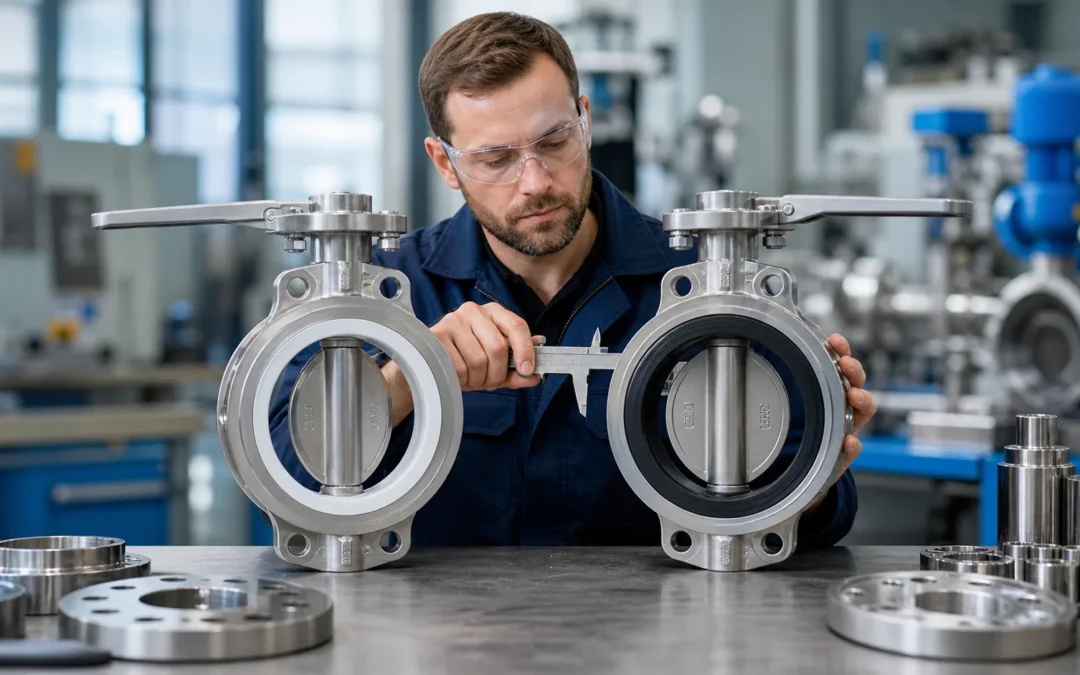
Specify High-Performance Butterfly Valves for More Accurate Quotes
Seat selection can materially change a high-performance butterfly valve quote because it affects the full valve configuration, not just one component. Material, seat design, temperature range, media compatibility, pressure rating, shutoff needs, and testing requirements all matter. When you send us complete application details, we can better review recognized-brand options, available inventory, and configurations that fit the end user’s requirements.
High-performance butterfly valves are often selected for demanding process conditions where cycling, shutoff performance, chemical exposure, pressure, and temperature all need close attention. The seat is not a universal interchangeable part. A PTFE seat in one manufacturer’s valve series may have a different design, pressure-temperature limit, or retention method than a similarly named seat in another series.
Before requesting a quote, we recommend gathering the valve size, pressure class, body and disc materials, stem material, media, operating temperature, line pressure, flow direction, shutoff requirement, and automation needs. Manufacturer documentation should confirm chemical compatibility and allowable pressure-temperature limits for the exact valve model.
Match Seat Material to Media and Temperature
Media chemistry and operating temperature are usually the starting point for selecting a seat. Common high-performance butterfly valve seat families can include PTFE, reinforced PTFE, and PEEK, though the exact options depend on the manufacturer and valve series.
PTFE-based seats are often considered when chemical resistance is a priority. Still, a PTFE label alone does not confirm that a valve is suitable for every chemical concentration, pressure level, temperature, or cycling condition. The seat must be reviewed as part of the complete valve design.
Reinforced PTFE may be considered when the application calls for greater resistance to deformation or cold flow within the manufacturer’s stated limits. PEEK and other higher-performance materials may be options for elevated temperatures, tougher cycling service, or process conditions that exceed standard PTFE-based seat capabilities. Material names are helpful, but the manufacturer’s technical literature remains the final guide.
For a quote-ready review, send the process information that can affect seat selection:
- Media name and concentration
- Normal and maximum operating temperature
- Normal and maximum pressure
- Solids content and cleaning chemicals
- Expected cycling frequency
Missing details can lead to an under-specified valve that may not fit the service. It can also result in a configuration that includes features the end user does not actually need. Our goal is to help you narrow the options based on documented application conditions, not simply select the highest-grade seat material.
Compare Soft, Reinforced, and Metal-Seated Designs
Soft-seated high-performance butterfly valves are often selected where tight shutoff and chemical resistance are important. Depending on the valve series, a soft seat may be made from PTFE or another compatible polymer-based material. These valves can be a practical choice when the service conditions fall within the manufacturer’s published operating envelope.
Reinforced-seat designs may be selected when pressure, temperature, or cycling demands call for added support. The reinforcement method matters as much as the base seat material. Some valve designs use energized seat geometry, backup support, live loading, or other series-specific features that influence how the seat performs under changing process conditions.
Metal-seated designs are a separate valve configuration, not simply a seat upgrade. They may be considered for higher-temperature service, abrasive media, or applications where soft-seat materials are unsuitable. Metal seating can involve different leakage expectations, trim requirements, body materials, and testing requirements. It should not be treated as a direct replacement for a soft-seated valve without reviewing the end user’s specifications.
A corrosive liquid service may point toward a PTFE-based seat, while a higher-temperature hydrocarbon or abrasive service may require a different seat construction or valve type. The correct answer depends on the documented operating conditions and the selected manufacturer’s specifications.
Review the Connected Quote Drivers
Changing the seat material can affect more than one line on a quote. A move from standard PTFE to reinforced PTFE, PEEK, or a metal-seated configuration may also change the disc, stem, packing, bearings, or body material. That is why size and pressure class alone are not enough to identify the correct high-performance butterfly valve.
Along with the seat choice, we recommend reviewing:
- Valve size and applicable pressure class
- Body, disc, stem, packing, and bearing materials
- Flange compatibility and end connections
- Actuator mounting and manual or automated operation
- Required documentation, certifications, or special testing
Certain service conditions can add more configuration questions. High cycle counts, vacuum service, dirty or abrasive media, fire-safe requirements, fugitive-emissions requirements, oxygen cleaning, and special testing may all affect the available valve options. Not every high-performance butterfly valve meets these requirements, so the selected series and configuration should be confirmed through manufacturer documentation.
For replacement projects, include the existing valve tag, product identifier, approved manufacturer list, prior submittal, or end-user datasheet when available. These details help us compare the existing valve arrangement with possible alternatives and identify mounting or dimensional considerations early.
Specify the Valve Series and Replacement Requirements
The valve series or product identifier can make a major difference in seat selection. A manufacturer’s model number may identify the seat arrangement, available materials, mounting details, pressure class, and other configuration limits. If you do not have a model number, application details can still help us narrow the choices.
Replacement work requires more than matching a seat material by name. A similar PTFE, reinforced PTFE, or metal seat description may not perform the same way in another manufacturer’s valve. We recommend reviewing face-to-face dimensions, flange pattern, pressure class, disc clearance, actuator interface, and published performance limits along with the seat construction.
A complete high-performance butterfly valve request should identify the valve size, pressure class, body, disc, and stem materials, preferred seat family or existing valve model, media, operating and design pressure, operating and design temperature, flow direction, shutoff expectations, and operation method. Include any required testing, documentation, end-user specifications, and approved manufacturer requirements.
The best seat is not automatically the most advanced material available. It is the seat and valve configuration that matches the actual process conditions, performance expectations, approved products, and project requirements. Clear application data helps prevent specification gaps and supports a more accurate valve quote.
Clarify Your Valve Requirements Before Ordering
Review our high-performance butterfly valves to compare available configurations for demanding process applications. Our team at Energy Valves can help you identify the details needed for a complete RFQ. Contact us to discuss your valve requirements and request pricing.