
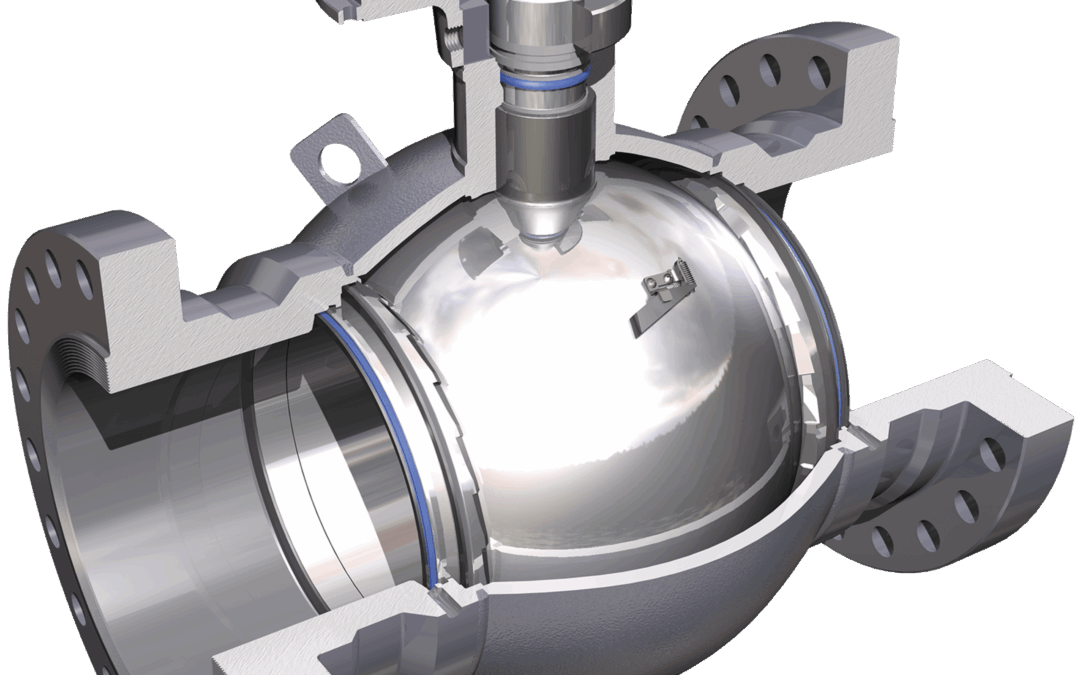
OMB valves are a line of forged and cast steel gate, globe, check, and ball valves manufactured to API 6D, API 600, and ASME B16.34 standards, widely used across upstream, midstream, and refining energy applications. Operators specify OMB valves for pressure classes from 150 to 2500 in sizes from 1/2″ to 60″, but comparable performance is available from several manufacturers. This guide explains the specifications, applications, sizing, and material trade-offs so you can select the right valve—whether that is an OMB unit or an equivalent from another qualified supplier.
What are OMB valves and where are they used?
OMB valves are valves designed for isolation and flow control in oil and gas, power generation, petrochemical, and process piping systems. The core catalog covers gate valves for full-bore isolation, globe valves for throttling and regulation, swing and lift check valves for backflow prevention, and floating and trunnion ball valves for tight shut-off.
Typical service environments include:
- Wellhead and gathering lines in upstream production
- Transmission and distribution pipelines in midstream
- Refinery unit isolation and pressure relief headers
- Steam and feedwater systems in power plants
Because these applications demand fire-safe, low-emission, and high-cycle performance, OMB valves are commonly certified to API 6FA fire-test and ISO 15848 fugitive-emission standards. When an operator asks whether OMB valves fit a given service, the answer hinges on pressure class, temperature range, and media compatibility rather than brand alone. Multiple manufacturers, including API-monogrammed producers listed by the American Petroleum Institute, build to the same governing specifications, which means functionally equivalent valves are readily sourced.
What specifications do OMB valves meet?
OMB valves are engineered to internationally recognized design and testing standards, making them interchangeable with equivalent valves from other qualified manufacturers. The governing specifications matter more than the label on the body.
Design and dimensional standards
- API 6D — pipeline valves (gate, ball, check)
- API 600 / API 602 — bolted-bonnet and compact steel gate valves
- ASME B16.34 — pressure-temperature ratings and wall thickness
- ASME B16.10 — face-to-face and end-to-end dimensions
- ASME B16.5 / B16.47 — flange dimensions and ratings
Testing and quality standards
- API 598 — inspection and shell/seat testing
- API 6FA / API 607 — fire-safe qualification
- ISO 15848-1 — fugitive-emission classification
Because these standards are public and enforced by third-party certification, a valve from any monogrammed manufacturer with matching ratings will bolt into the same flange and hold the same pressure. That is why procurement teams evaluating OMB valves can confidently consider alternatives that carry identical certifications and dimensions.
How much do OMB valves cost?
OMB valve pricing depends far more on size, pressure class, body material, and trim than on brand. A 2-inch Class 150 carbon steel gate valve may run a few hundred dollars, while a 24-inch Class 900 trunnion ball valve in low-temperature carbon steel can reach five figures per unit.
The main cost drivers are:
Size and pressure class
Larger bores and higher classes require heavier forgings, thicker walls, and larger actuators—each step up multiplies material and machining cost.
Body and trim material
Carbon steel (A216 WCB) is the baseline. Low-temperature carbon steel (LCC), stainless (CF8M), and duplex alloys add significant cost for sour or cryogenic service.
Actuation and options
Gear operators, pneumatic or electric actuators, fire-safe seats, and extended stems for buried service all add line-item cost.
Because specifications drive price, comparing quotes across manufacturers producing to the same API standard is the most reliable way to control cost. Lead time and stock availability often matter as much as unit price for energy operators facing turnaround deadlines.
Why do competitors rank for OMB valves, and what do we do better?
Searches for OMB valves surface both the original manufacturer and distributors who stock or cross-reference the line. Competitors rank because they publish detailed specification pages and clear cross-reference data. The practical takeaway for a buyer is that an OMB valve is one option among several that meet the same standard—and sourcing flexibility protects your schedule and budget.
What a strong distributor does better than a single-brand catalog:
- Cross-referencing: matching an OMB part number to an equivalent valve by bore, class, material, and end connection
- Multi-brand availability: representing several manufacturers so a substitution is possible when lead times slip
- Application engineering: confirming that the valve fits the service, not just the flange
Energy Valves represents multiple valve brands including KF, Galli & Cassina, and WKM, and can cross-reference valve requirements against equivalent product lines. This multi-source model means that when a specified OMB valve is unavailable or over-lead-time, a functionally identical alternative can be sourced without recertifying the piping system. You can review the full range on our line sheet.
What is the difference between OMB gate and ball valves?
Gate valves and ball valves serve different functions, and choosing between them for an OMB-equivalent order depends on how the valve will be operated. Gate valves excel at full-bore isolation with low pressure drop, while ball valves excel at fast, tight, quarter-turn shut-off.
Gate valves
- Rising or non-rising stem, multi-turn operation
- Full-bore flow with minimal restriction
- Best for on/off isolation, not throttling
- Common in pipeline and refinery isolation duty
Ball valves
- Quarter-turn, fast operation
- Floating ball (smaller sizes) or trunnion-mounted (larger, higher pressure)
- Excellent bubble-tight shut-off, low torque with trunnion design
- Common in pipeline block-and-bleed service
For detailed pressure and torque figures, the Fluid Controls Institute and manufacturer datasheets provide the governing curves. Neither valve type is universally superior—gate valves suit gradual isolation and metering-free lines, while ball valves suit frequent cycling and emergency shut-down. Matching the valve type to the operating profile prevents premature seat wear and unnecessary torque loading on the actuator.
How do you select the right OMB valve for your application?
Selecting the right OMB valve—or a certified equivalent—comes down to matching five variables to your process conditions: valve type, size, pressure class, materials, and end connections. Getting these right the first time avoids costly re-orders and piping rework.
Step-by-step selection
1. Define the function — isolation, throttling, or backflow prevention determines gate, globe, ball, or check.
2. Set the pressure class — derive from design pressure and temperature per ASME B16.34.
3. Choose body and trim material — match to media (sour, cryogenic, corrosive) and temperature.
4. Specify end connections — raised-face flange, RTJ, butt-weld, or threaded.
5. Add options — fire-safe seats, low-emission packing, gear or powered actuation.
Document these in a valve datasheet before requesting quotes. A complete datasheet lets any qualified supplier confirm a match and offer equivalents, which widens availability and improves pricing leverage. When service is severe—sour gas, high temperature, or high cycle count—verify the specific certification (NACE MR0175, API 6FA, ISO 15848) rather than assuming the standard product covers it.
Are there alternatives to OMB valves?
Yes—several manufacturers produce gate, globe, check, and ball valves to the same API and ASME standards as OMB valves, making functionally equivalent alternatives straightforward to source. Because dimensions and ratings are governed by public standards, a certified equivalent bolts into the same flange face and holds the same pressure-temperature rating.
When evaluating alternatives, confirm these match:
- Bore type — full-bore versus reduced-bore
- Pressure class and rating — identical ASME B16.34 P-T rating
- Body material — same or superior metallurgy
- End-to-end dimensions — per ASME B16.10
- Certifications — fire-safe, fugitive-emission, NACE as required
Brands such as KF, Galli & Cassina, and WKM provide overlapping product envelopes for many energy-sector duties. A distributor that carries several lines can cross-reference an OMB part number to an in-stock equivalent, which is often faster than waiting on a single-brand lead time. The key discipline is confirming standard-for-standard equivalence on paper before substituting, so the piping system’s design basis remains intact.
How do you maintain OMB valves in service?
OMB valve maintenance centers on periodic exercising, seat and packing inspection, and actuator service to preserve tight shut-off and low-emission performance. A neglected valve seizes, leaks, or fails to close during an emergency shut-down—outcomes that dwarf the cost of preventive care.
Routine maintenance tasks
- Cycle the valve periodically to prevent seat and stem sticking
- Inspect packing for fugitive emissions; re-torque or replace glands
- Lubricate gear operators and lubricated plug valves per the manufacturer interval
- Test fire-safe seats and check actuator stroke on critical service
When to repair versus replace
Seat and packing kits restore many valves economically. Body erosion, cracked bonnets, or worn stem threads generally warrant replacement. Keep spare gaskets, packing sets, and, for lubricated plug valves, the correct sealant on hand. Consistent maintenance records also support integrity-management programs and regulatory audits common in energy operations. Sourcing spares and cross-referenced replacements from a multi-brand distributor shortens downtime when an original OMB part is on extended lead time.