
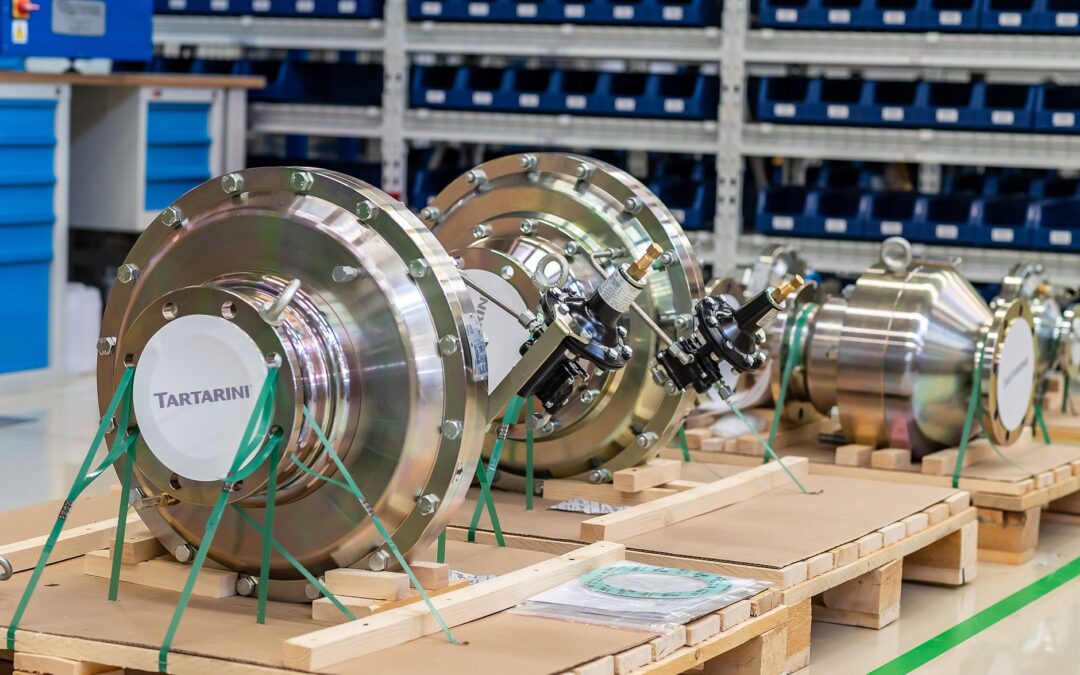
Pneumatic valve actuators convert compressed air into the rotary or linear motion that opens and closes a valve. A typical quarter-turn pneumatic actuator operates on 60–120 psi of clean, dry air and delivers torque anywhere from a few hundred to several hundred thousand inch-pounds, depending on bore size and supply pressure. The two dominant designs are spring-return (fail-safe) and double-acting, and choosing between them is the first decision that drives everything else about your package.
This guide explains how pneumatic valve actuators work, what they cost to specify, and how to match one to a ball, plug or butterfly valve without over- or under-sizing. Whether you resell valve packages or stock replacement actuators, the fundamentals below help you quote accurately.
How do pneumatic valve actuators work?
Pneumatic valve actuators work by routing compressed air into a sealed chamber, pushing a piston (rack-and-pinion) or pistons (scotch-yoke) that convert linear force into the 90° rotation a quarter-turn valve needs. When air enters, the actuator strokes open; venting or reversing the air strokes it closed.
Rack-and-pinion designs are the workhorses of the quarter-turn world — compact, symmetrical in torque output, and economical for small-to-medium valves. Scotch-yoke designs produce high torque at the start and end of travel, which suits large valves that need extra breakaway force. For a deeper primer on actuation principles, the ISA publishes standards and training that cover valve control fundamentals.
The actuator mounts to the valve stem through an ISO 5211 bolt pattern, so the actuator bore, mounting flange and stem dimensions must all align. Getting the drive and flange right is as important as getting the torque right; a correctly sized unit that won’t bolt up is still the wrong part.
What is the difference between spring-return and double-acting?
Spring-return actuators use air to move in one direction and a set of internal springs to return to a fail position; double-acting actuators use air in both directions. That single difference reshapes your air supply, torque budget and safety behavior.
Spring-return (fail-safe)
On air or power loss, the springs drive the valve to a known position — fail-closed or fail-open. This is the standard for emergency isolation and safety shutdowns. The trade-off: springs consume part of the output torque, so a spring-return unit is physically larger than a double-acting unit of the same effective torque.
Double-acting
Air powers both the open and close strokes, giving maximum torque for a given actuator size. There is no automatic fail position, so these suit applications where losing air pressure in the current position is acceptable. They are generally smaller and less expensive than an equivalent spring-return model.
How do you size a pneumatic actuator?
You size a pneumatic actuator by matching its output torque to the valve’s required torque plus a safety factor — commonly 25% to 50%. Undersizing causes stalls; gross oversizing wastes money and can damage the valve stem.
The sizing steps
1. Find the valve’s breakaway and running torque from the valve manufacturer’s data at your actual operating pressure and media.
2. Add a safety factor — 25% is typical for clean service, higher for slurries, high cycles or infrequent operation.
3. Choose your air supply pressure and read the actuator’s torque at that pressure; spring-return outputs vary across the stroke.
4. Confirm the ISO 5211 mounting and stem fit.
Actuator torque charts always list output by air pressure, so quoting at 80 psi versus 60 psi can change which model you need. The U.S. Department of Energy resources on compressed-air systems are a useful reference for understanding how supply pressure affects performance and cost.
What air supply do pneumatic actuators need?
Pneumatic actuators need a clean, dry, regulated air supply — typically between 60 and 120 psi. Contaminated or wet air is the leading cause of premature seal failure and sluggish operation.
Most installations include a filter-regulator to control pressure and remove particulates and moisture. Air quality is commonly specified against ISO 8573-1 classes; drier, cleaner air extends seal and bearing life. If the supply pressure fluctuates, the actuator’s effective torque fluctuates with it, which is why a dedicated regulator at the valve is good practice.
Consumption matters too: larger actuators displace more air per stroke, so high-cycle applications on a limited compressor can starve downstream devices. When you quote an actuator package, confirm the customer’s available pressure and whether their compressor can sustain the cycle rate.
Which valves pair with pneumatic actuators?
Quarter-turn valves — ball, plug and butterfly — pair most naturally with pneumatic valve actuators because they need exactly 90° of rotation. Multi-turn gate and globe valves require either a gearbox adapter or a linear actuator instead.
Common pairings
- Ball valves — fast, tight shut-off; the most common automated quarter-turn pairing.
- Butterfly valves — lightweight for large-diameter flow control; watch dynamic torque from flow.
- Plug valves — high seating torque, so size generously.
Brands such as WKM, Nutron, Grove and DEMCO cover the quarter-turn ball and plug categories that mount cleanly to pneumatic units. You can browse automation-ready valve lines through our product catalog to confirm stem and flange compatibility before specifying an actuator.
How much do pneumatic valve actuators cost?
Pneumatic valve actuator pricing varies widely by torque class, with small rack-and-pinion units costing far less than large scotch-yoke, high-torque spring-return models. Because published pricing changes with configuration and supply, the honest answer is that cost depends on torque, fail mode, accessories and quantity.
What drives the price
- Torque class and size — the single biggest factor.
- Spring-return vs double-acting — spring units run larger and cost more for equal torque.
- Accessories — solenoids, positioners, limit switches and filter-regulators add up.
- Materials and coatings — corrosion-resistant options for harsh service.
For an accurate figure, request a quote with the valve model, line pressure, air supply and fail position in hand. That lets a supplier size the unit correctly the first time rather than guessing at a catalog midpoint.
What accessories go with a pneumatic actuator?
The core accessories that complete a pneumatic actuator package are a solenoid valve, limit switch box, positioner and filter-regulator — each adding a layer of control or feedback.
Typical add-ons
- Solenoid valve — the electrical interface that tells the actuator to stroke.
- Limit switches — confirm open/closed position back to the control system.
- Positioner — enables modulating (throttling) control rather than open/close only.
- Filter-regulator — conditions the incoming air.
- Mounting kit — the bracket and coupler that adapt actuator to valve.
A bare actuator is rarely a drop-in solution; the accessories determine whether it switches on/off or modulates to a 4–20 mA signal. When you specify a package, list which accessories are included so the downstream buyer knows exactly what arrives.
How do resellers source pneumatic actuators and valves together?
Resellers source actuators and valves together by working with a wholesale supplier who can match compatible brands, confirm mounting dimensions and quote the package as one line item. Buying the valve and actuator separately risks mismatched flanges, stems or torque.
Energy Valves supplies wholesale valves to reseller partners, carrying ball, plug, butterfly, check and gate valves from brands including WKM, Wheatley, Nutron, KF, Grove and DEMCO, along with gear operators that pair with automation packages. Working from a single catalog of compatible valve lines simplifies spec checks before an actuator is selected. Resellers can reach the sales team at (855) 908-6352 or sales@energyvalves.com to request reseller pricing and confirm availability.
Because Energy Valves sells to resellers rather than end users, fabricators or engineering firms, its catalog is organized around the brands and model families those partners resell — which keeps quoting fast when a customer specifies a particular valve-and-actuator combination.
Frequently Asked Questions
What is the difference between spring-return and double-acting pneumatic actuators?
Spring-return actuators use air to move one direction and internal springs to return to a fail position on air loss, making them fail-safe. Double-acting actuators use air for both strokes, giving more torque per size but no automatic fail position.
What air pressure do pneumatic valve actuators need?
Most pneumatic valve actuators operate on a clean, dry, regulated supply between 60 and 120 psi. A filter-regulator at the valve conditions the air and stabilizes torque output, since effective torque rises and falls with supply pressure.
How do you size a pneumatic actuator for a valve?
Match the actuator's output torque to the valve's breakaway and running torque at operating pressure, then add a safety factor of 25% to 50%. Confirm the ISO 5211 mounting pattern and stem fit before finalizing the model.