
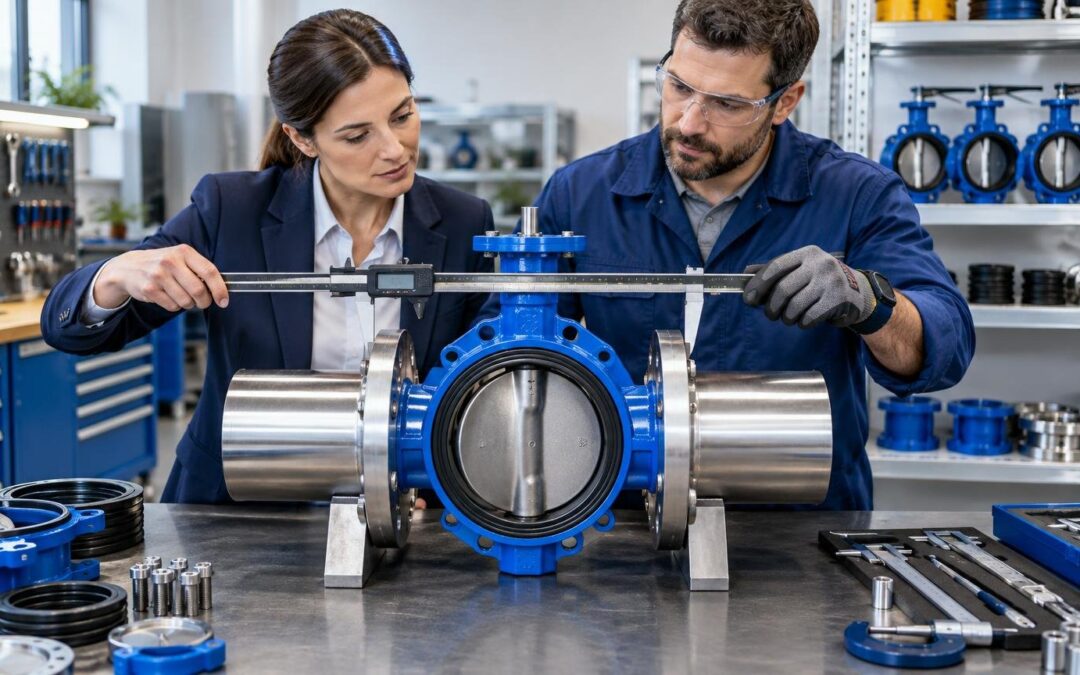
Butterfly valve face-to-face dimensions should be confirmed before you quote, order, or promise a replacement valve. Similar-looking valves can have different end-to-end measurements, even when the nominal size and pressure class appear to match.
We recommend treating dimensional confirmation as a practical part of every replacement or retrofit request. A small mismatch can affect flange alignment, piping fit-up, bolt selection, actuator clearance, and the customer’s installation schedule.
Confirm Dimensions Before You Commit to a Quote
Face-to-face dimension is the distance between the valve’s end connection faces. For a butterfly valve distributor, that measurement matters because the valve must fit the available space between existing flanges or piping connections.
When the dimension is wrong, the valve may not line up with the piping system. The customer could need a spool-piece change, different bolts, or additional field work before installation can continue. Those issues can create avoidable delays and make a replacement valve look like the wrong choice, even if its materials and pressure rating are otherwise acceptable.
Before we confirm a quote, we encourage sellers to verify the proposed valve against the existing installation. That simple review helps protect your margin, your reputation, and your customer’s project timeline.
A dimensional check is especially important when a valve will replace an older unit, fit into a tight piping layout, or connect to an existing actuator assembly. Product descriptions are helpful, but they are not enough to prove a valve will fit.
Butterfly Valve Face-to-Face Dimensions Are Not Universal
“Same size” does not always mean “same fit.” Wafer, lug, double-flanged, and high-performance butterfly valves can have different dimensional requirements, even when they are intended for the same nominal pipe size.
Body style is only one part of the equation. Flange drilling, end connection, pressure rating, and valve series can all affect whether one valve can replace another without piping changes. A wafer-style valve, for example, is held between flanges, while a lug-style valve has threaded lugs that change how it is bolted into the line.
We recommend confirming the following before treating two valves as interchangeable:
- Valve body style, such as wafer, lug, or double-flanged
- Face-to-face dimension and flange pattern
- Pressure class and applicable piping specification
- Manufacturer series and current dimensional drawing
Standards such as ASME B16.10 and API 609 may apply to certain butterfly valve designs and services. Still, the manufacturer’s current dimensional submittal governs the actual product being quoted. A standard can guide the review, but it should not replace the drawing for the specific valve configuration.
Verify the Valve Standard, Design, and Pressure Class
A butterfly valve’s dimensions are tied to its design and intended duty. A resilient-seated wafer valve and a high-performance double-offset butterfly valve may both fit the same pipe size, yet they can have different face-to-face measurements, body shapes, and actuator requirements.
The best way to avoid assumptions is to collect enough technical detail before confirming the replacement. We suggest comparing the customer’s valve tag, datasheet, general arrangement drawing, and piping specification with the proposed valve.
Useful details include:
- Nominal valve size and valve type
- Body style, end connection, and pressure class
- Temperature range, seat material, and disc material
- Shaft design and actuation method
- Installation orientation and available actuator clearance
Temperature and materials matter because they help identify the valve design the customer actually needs. The actuator also deserves attention. Even when the valve body fits between the flanges, a larger actuator, gearbox, or mounting arrangement may interfere with nearby piping, supports, or equipment.
For replacement work, we do not recommend relying on a short description such as “butterfly valve, six inch, class rated.” That description leaves too many open questions. The valve’s full configuration should match the application as well as the available installation space.
Use Product Identifiers and Current Manufacturer Drawings
Clear product identifiers make valve identification much easier. When available, request the full manufacturer name, product line, model or series number, size, pressure class, and serial number. A valve tag or legible nameplate can often provide the details needed to separate one similar-looking design from another.
This step is particularly helpful when customers are replacing valves associated with brands such as WKM, Wheatley, Tom Wheatley, Nutron, DEMCO, or other Cameron valve brands. Product names alone may not identify the exact configuration. A series can have different end connections, pressure classes, materials, or dimensional options.
Older purchase descriptions, catalog screenshots, and field estimates can be useful starting points, but current manufacturer documentation is more dependable. Product lines may change over time, and optional configurations can alter the valve’s dimensions.
Before submitting a final quote, we recommend comparing the proposed valve with the manufacturer’s published dimensional drawing. For retrofit projects and tight piping layouts, that review should include both the valve’s face-to-face dimension and its overall envelope, including the actuator when one is required.
Prevent Fit-up Problems Before the Valve Reaches the Jobsite
Skipping a face-to-face review can lead to a valve arriving at the jobsite without fitting the existing line. Common issues include misaligned flanges, unexpected spool-piece changes, incompatible bolts, actuator interference, delayed commissioning, and added freight for returns or replacements.
A butterfly valve distributor can reduce these problems by documenting the dimensional review in the quote file. If the proposed valve differs from the existing unit, that difference should be explained before an order is placed. Clear communication gives the customer time to confirm whether a piping modification is acceptable.
A practical final check should cover:
- Valve style and applicable standard
- Face-to-face dimension and flange pattern
- Pressure class and material selection
- Actuator envelope and mounting arrangement
- Installation orientation and piping clearance
When documentation is incomplete, we can help sellers review available valve tags, drawings, specifications, and application details to identify the right product information. Confirming the manufacturer documentation before making a replacement commitment is usually far easier than resolving a fit-up problem in the field.
Frequently asked questions
Question: Can a wafer butterfly valve replace a lug-style butterfly valve?
Answer: Not automatically. Although the nominal pipe size may match, the body style, bolting arrangement, face-to-face dimension, flange pattern, and service requirements should be checked against the existing installation and the manufacturer’s dimensional drawing.
Question: Is a valve tag enough to confirm a replacement butterfly valve?
Answer: A valve tag is a useful starting point, but it may not show every dimensional or material detail. Comparing the tag information with the existing valve, application requirements, and current manufacturer documentation provides a more reliable basis for confirming fit and suitability.
Get the Details Needed for a Confident Valve Quote
Face-to-face dimensions should be confirmed whenever a butterfly valve will replace an existing valve, fit into an established piping system, or meet a specific project specification. The closer the piping layout and the more exact the replacement requirement, the more important that drawing review becomes.
A reliable quote starts with a complete description of the valve, its duty, and its installation space. When the size, style, standard, dimensions, materials, flange pattern, and actuator requirements are reviewed together, you can move forward with fewer surprises and a clearer fit-up expectation.
Get Butterfly Valve Support for Your Application
As your butterfly valve distributor, Energy Valves can help you review available valve options for your operating requirements. Our team can discuss product details and help identify information to include in your RFQ. When you are ready to discuss your project, contact us for assistance.